I have been doing these entries for 5 years now on my Medium page.
They have always been more for myself, to think more deeply about the books that I write and externalize my thoughts. By doing these bibliographies, I noticed that I remember way more of what I had read, compared to previous periods of my life, where the amount of reading I was doing was similar, but I had more trouble retaining information.
However, to some degree these writings are for you, my reader, as well. I have been reflecting on how to improve the format in which I review these books, so this year, I am introducing a novelty — I will split each book into two parts.
One will be the objective topic of the book, completely detached from my opinion of it. Think of this part as the description on the back, just shorter and not going out of its way to sell you the book.
The other part will be my take and evaluation of said book. Sometimes it will include some wider context, but generally, I will just examine it through my own perspective.
Let’s see how the new format sticks:
1. The Beauty of Everyday Things, by Sōetsu Yanagi (1937)
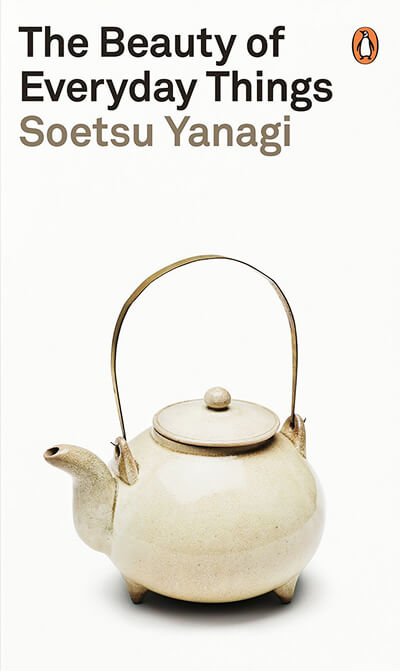
Topic of the book: A collection of essays by Japanese art critic and philosopher Sōetsu Yanagi, that outlines the “mingei” philosophy, which is about the aesthetic and spiritual value found in ordinary, functional objects made by anonymous craftsmen. The book argues that true beauty does not reside in expensive, ornate art, but in the simplicity, honesty, and utility of items like teapots, lacquerware, and hand-woven textiles used in daily life. By advocating for the “beauty of use,” Sōetsu challenges modern consumerism and industrialization, urging a return to a lifestyle that respects traditional craftsmanship and the humble elegance of the everyday.
My take: I started reading this book while still on my trip to Japan. It was a perfect read to spend time in a Shinkansen, once I admired the sheer speed of it for long enough.
It’s a well-written book about a subject deeply ingrained into the minds of the Japanese. I also adore the humble, but well-made everyday items, so this book was a joy to go through. The comforting tone of Sōetsu and the detailed descriptions of some of the wares crafted by Japanese inspired me to actively look for such items during my trip.
2. The Making of a Manager: What to Do When Everyone Looks to You, by Julie Zhuo (2019)
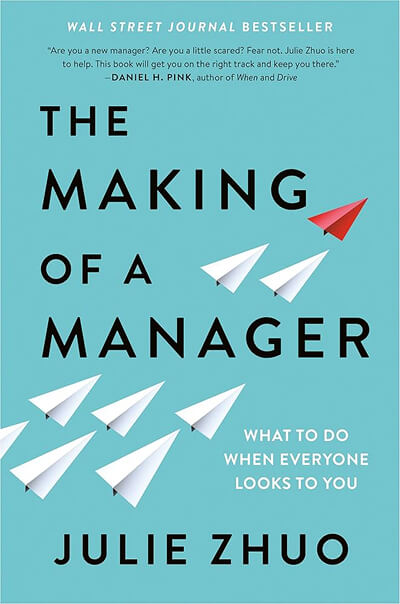
Topic of the book: A practical guide based on Julie’s (Former VP of design at Facebook) personal experience of becoming a manager. It offers insights into what makes a great leader and how to navigate the challenges of management for new and experienced managers.
My take: Picking up this book I feared a little that it would be focused exclusively on content relevant only to new managers. And a big portion of the book was. But as there were many chapters that are definitely useful for more people who have been in a management position longer.
I really liked Julie’s definition of a manager’s purpose — “achieving better outcomes through a team than any individual could accomplish alone”. I also liked the tone of the book, it’s really friendly and conversational. You feel like you are talking with a friend, who is sharing her journey as a manager, and mentoring you based on her rather turbulent, but successful leadership experience.
3. Bloody Rose, by Nicholas Eames (2018)
Topic of the book: A sequel to Kings of the Wyld (that I read 2 years ago), it’s a fantasy novel about a band of warriors, led by Bloody Rose. She is trying to make a name for herself by engaging in monster-slaying gigs but as a result gets her band entangled in a much larger conflict.
My take: Generally, Bloody Rose is strikingly similar to its predecessor. Just like in the first book, this one has a lot of musical references, funky humor, and a smooth build-up of tension across the book, that unravels in an epic battle at the end.
As a result, it’s rather hard to say which one of the two books in the series I liked more, although I would pick Kings of the Wyld by a small margin. Both are good books, but Bloody Rose was a bit too cheesy for me sometimes, and contains an unnecessarily large amount of passages including substance abuse, which lowered the enjoyment for me personally.
However, the ending fight in Bloody Rose felt vastly more polished and engaging than that of the first book. After the rather disappointing culmination of the Kings of the Wyld, this one was a definite improvement that left a good impression after finishing the last chapter.
4. Why We Sleep, by Matthew Walker (2017)
Topic of the book: Sleep, obviously, is the central theme. This book explains how sleep is essential for health and cognitive performance, detailing the science behind sleep stages and the serious consequences of sleep deprivation. It also offers practical strategies for improving sleep quality to enhance daily life.
My take: It’s definitely a well-written book, and as one based on a lot of scientific studies, it did not seem too “dry” for my taste. Matthew throws in a joke or a silly metaphor here and there to make the book more engaging. However, soon it becomes obvious how much he tries to find synonyms for “sleep” as every paragraph is just riddled with that word, to the level that it becomes a bit distracting. Nevertheless, the content of the book is really good and it made me understand and appreciate sleep more.
There’s also something to “Why We Sleep” that makes me want to draw parallels to the way “Thinking, Fast and Slow” by Daniel Kahneman was written. These two books, aside from the main difference of the topic, seemed very similar to me. So maybe if you liked one, you will like the other.
5. Indistractable: How to Control Your Attention and Choose Your Life, by Nir Eyal (2019)
Topic of the book: A guide to managing distractions and enhancing focus in an increasingly connected world. Eyal introduces a four-part framework to help people regain control over their attention: Master Internal Triggers, Make Time for Traction, Hack back External Triggers, and Prevent Distractions With Pacts.
My take: I’ll be blunt, it was a boring book. A big part of it was that I have already heard similar principles many times, and made life adjustments mentioned in the book a long time ago, because they are as basic as “Turn off your phone’s notifications”, or “Put distracting things out of the way”.
However, from all this grey mass of generic advice, one chapter stood out for me — the case study of Slack (the workplace messaging app company), and how they manage distractions at work. Slack has itself become a synonym for distraction, but it seems that the company that has built the tool, has it well under control, meaning that it’s possible to achieve workplace focus despite the tools. This shows us that distractions at work (including people putting meetings in your calendar without consent left and right) are a cultural issue, rather than a technological one. For me, this case study was definitely the highlight of this book
6. High Output Management, by Andrew S. Grove (1983)
Topic of the book: How to maximize organizational productivity by treating management as a “production process” metaphor. Its central thesis is that a manager’s output equals the output of the units under their supervision. To achieve this, Grove emphasizes “managerial leverage,” where a leader focuses on high-impact activities like training and delegation, which exponentially increase the team’s total results.
My take: My former manager and mentor Martin recommended me this book when we were discussing growing my own management competencies. I dove right in and had blasted through it by the time our next 1:1 meeting was scheduled.
“High Output Management” made me think of management and leadership in a different way. Most of the material on this topic that I had read before focused on human relationships: how to be a better leader for your direct reports, how to grow your team, how to deal with people, essentially. This book, while still having some of that “people” flavor, was more on the other side of management, which I did not put much thought into before — that is, management in a business sense. Andrew talks about things like the “breakfast factory metaphor” to teach important topics like limiting steps, production flows and quality indicators. Other topics were about choosing which aspects of business to centralize/decentralize and how to come to such decisions. In short, it’s about how to manage business, rather than to manage people (and I know both are interlinked!).
For a book on such topics, I did not find it to be dry or cumbersome, like The Four Steps to the Epiphany, that I read last year. “High Output Management” was a pure joy to read, and I would place it as one of my favorite books this year.
7. The Dispossessed, by Ursula K. Le Guin (1974)
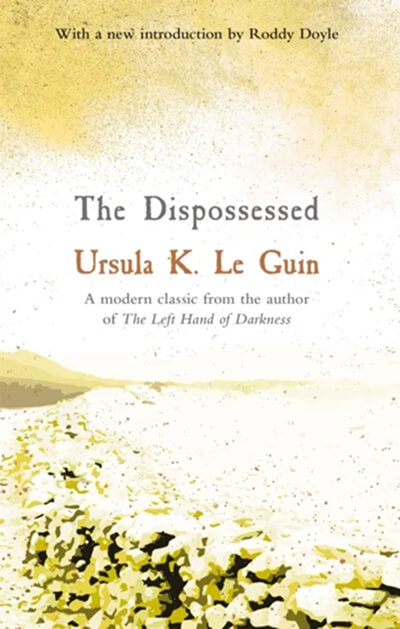
Topic of the book: It’s a science fiction novel about a physicist who is caught between two contrasting worlds — one, a resource-scarce anarchist collective based on communal sharing and voluntary cooperation, and another, a luxurious capitalist society built on private property and social hierarchy. By contrasting these two civilizations, the text details the challenges of maintaining a revolutionary society and the personal cost of seeking scientific truth across ideological borders.
My take: While the internet describes this book as sci-fi, it truly felt different compared to more quintessential books of this genre. In fact, with most books I can find similarities to some previous titles that I’ve read, but it isn’t the case with this one. It does not resemble any other book that I remember reading before. The timeline is a funky alternation between present and past, the topics are rather unusual, and even the vocabulary is sometimes strange. Some avant-garde vibes in this book, definitely.
In my view, it does more service to this novel to describe it as political fiction. There is science involved in the narrative, yes, but it definitely fades into the background compared to political themes of the plot. Which is not a bad thing by any means, it makes for a truly captivating book, and you can feel how deliberate and well thought-out feels the anarchist society and their outlook on their capitalist cousins.
This book, feels a lot like a critique on the capitalist society. It’s as if an alien from another planet, governed by communal principles landed in current-day USA. The confusion and frustration that this alien would have while observing us, is almost palpable. One speech by Shevek on planet Urras (the capitalist planet) captures some of this perfectly. See this quote, one that stood out to me:
“You are rich. You own. We are poor. We lack. You have. We do not have. Everything is beautiful here, only not the faces. On Anarres nothing is beautiful, nothing but the faces. The other faces. The men and women. We have nothing but that, nothing but each other. Here you see the jewels. There you see the eyes. And in the eyes you see the splendor, the splendor of the human spirit, because our men and women are free possessing nothing. They are free. And you, the possessors are possessed. You are all in jail, each alone, solitary with a heap of what he owns. You live in prison, die in prison. It is all I can see in your eyes, the wall, the wall!”
The thing I enjoyed most while reading “The Dispossessed” is how it makes things, that we, as humans in the capitalist society accept as normal and ordinary, seem so strange and outlandish. All in all, it’s just another book in my “2025 favorites” wall.
8. Fooled by Randomness: The Hidden Role of Chance in Life and in the Markets, By Nassim Nicholas Taleb (2001)
Topic of the book: Essays that investigate the pervasive influence of luck and probability in life and the financial markets. “Fooled by Randomness” examines how human beings systematically mistake noise for signal, and luck for skill, leading to overconfidence and poor decision-making. By detailing cognitive shortcuts like hindsight bias, Nassim argues that many perceived successes are actually the result of random variance rather than personal merit or strategy.
My take: By reading this book you can quickly tell what a ridiculously smart person Nassim is, without him trying too hard to appear that way. It’s these kind of books that I enjoy a lot — you definitely get smarter by reading it, and that is, in my opinion, twice as difficult to achieve, when most of the book’s content is essaystic. That is, there is very little scientific rigor in this book — it reads more like a philosophy text than a book filled with research findings and implications, like “Thinking, Fast and Slow” or “Why We Sleep”.
It is also written in a quirky tone which I liked. It reintroduced the word “ridicule” in my vocabulary. And most importantly it made me more aware of the role randomness plays in all our lives. Another favorite of the year, three in a row!
9. The Wisdom of Crowds: Why the Many Are Smarter Than the Few, by James Surowiecki (2004)
Topic of the book: James theorizes that large, diverse groups often possess greater collective intelligence than individual experts. This book explains how the aggregation of independent judgments can lead to superior problem-solving, prediction, and decision-making across various fields like economics and biology. By examining several conditions (diversity of opinion, independence, and decentralization) James demonstrates how groups can accurately estimate quantities or coordinate behaviors without central leadership.
My take: It was an interesting, but not all that memorable read. I admired the fact that James not only pushed his theory as hard as possible, but also tried to look from the opposite side — he dedicated entire chapters to explain in which cases groups tend to make stupid decisions. In other words, James was critical of his own thesis, and boiled down the key traits that make crowds wise. An ok book by all standards, but somehow the writing style and the stories mentioned in the book didn’t click as much as I had hoped.
10. Mapmatics: How We Navigate the World Through Numbers, by Paulina Rowińska (2024)
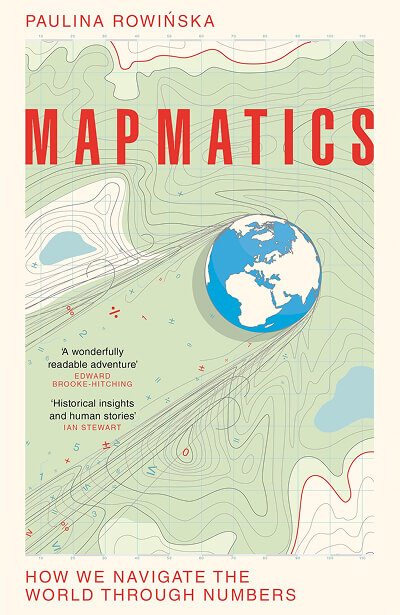
Topic of the book: There is an intrinsic connection between mathematics and cartography, and this book demonstrates how numerical principles shape our representation of the physical world. This book shows the mathematical techniques used to solve geographical problems, such as projecting a spherical Earth onto flat surfaces, optimizing delivery routes, and detecting patterns in criminal activity. By exploring topics ranging from political gerrymandering to the design of transit networks, Paulina reveals how the math behind maps influences both human navigation and social power structures.
My take: Oh how I wanted to love this book… reading the description I kept thinking “Yes! This looks like it was written specifically for me!”. And perhaps having such high hopes ruined what is otherwise a decent book. I’ll start with what I didn’t like. First of all, this book is not nearly as in-depth as I thought it would be (some could call it a plus though, it’s very accessible). If you have at least some interest in cartography, you will have probably heard about at least 60% of the examples in the book. Mercator projection, triangulation, London cholera maps and so on. Also I did not think anyone can inject wokeness into topics such as maths and cartography, but I have been proven wrong by this author.
However, not all is bad about “Mapmatics”. It’s definitely worth a read if you are rather new to these topics and want to learn more. I think Paulina does a great job at simplifying complex topics and her way of finding various accessible analogies is remarkable (like the pizza analogy to explain Gaussian curvature). To top it off, the cover of the edition that I own is absolutely beautiful!
11. The Anthropocene Reviewed: Essays on a Human-Centered Planet, by John Green (2021)
Topic of the book: This collection of essays reviews various facets of the human-centered planet, ranging from the Dr. Pepper to the Canada goose, on a five-star scale. The book functions as a series of John’s thought trains that blend research with personal memories to describe what is being evaluated. By rating both mundane inventions and profound natural phenomena, John Green explores the modern world and the complexities of finding meaning within the current geological age — the Anthropocene.
My take: Well, I thought it was an absolute disaster of a book. Most certainly the worst I read in 2025. I will try to prevent myself from making this into a rant, but I’ll just mention a couple of things that made me dislike “The Anthropocene Reviewed” so much.
Firstly, the ratings are entirely random. There is no attempted connection between the essay and the five star rating he gives at the end of each topic. It all sounds like a pretense to wrap this book into some sort of unique shape, but if you take out the five-star scale reviews, this book loses absolutely nothing, in fact I would argue this would make it better.
Secondly, it’s a very USA-centric book. Good luck relating to half of it if you grew up someplace else in the world. I got the impression that John is oblivious that the living experience in USA doesn’t constitute the whole Anthropocene.
Lastly, it’s an extremely John Green-centric book. Roughly half of the text is just John’s memories from his childhood, or from activities that he did some time back that he likes. If I knew this was the case before picking up the book, I wouldn’t have. I love John Green and his contribution to education, but I really did not expect or want to read how awkward his teen years were in a book, supposedly, about the Anthropocene.
Really the only reason I powered through this book was because at the time I was staying at an all-inclusive hotel in Turkey with a broken hand and had nothing else better to do while my friends were out swimming.
12. The Sirens of Titan, by Kurt Vonnegut (1959)
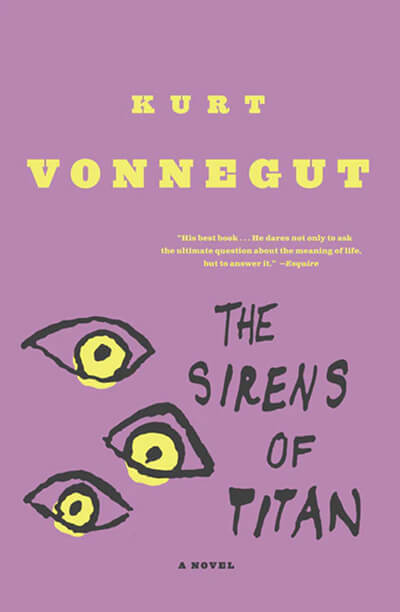
Topic of the book: This satirical science fiction novel explores the themes of free will, purpose, and the randomness of existence through an interplanetary journey involving the richest man on Earth. The narrative follows Winston Niles Rumfoord and Malachi Constant as they are swept into a grand, clockwork manipulation of human history orchestrated by an alien civilization.
My take: In terms of the vibe, this book is what you would get if Mark Twain collaborated with Liu Cixin. Very quirky and absurd at times, but it always kept me on the edge of my seat — I wanted to know what happens next in this bizarre narrative.
It’s also the first book written by Vonnegut that I’ve read, but so far I like his style, and I’m already eyeing a few of his other books to pick up when I need some more fiction in my life.
13. But What If We’re Wrong?, by Chuck Klosterman (2016)
Topic of the book: Chuck writes about the unique idea that historically, what society has deemed as objective truth, was proven wrong at some time, and examines the probability that our current cultural and scientific certainties will eventually also be found incorrect. The book functions as a series of thought experiments that encourage you to view the present day through the eyes of a distant future historian.
My take: What an interesting topic to write about! And Chuck came across as a very smart guy in this book. The range of his knowledge and ability to draw creative conclusions from the facts available to him is impressive. Of course, he can’t prove his theories right now, and he is aware that the predictions he makes about the future are likely to be wrong as well, but his arguments made me believe the thesis: Indeed our currently held truths might be proven wrong at some point.
The only complaint about this book is that around the middle of it, Chuck’s essays start to feel detached from the main point he is trying to make. They are good essays nonetheless, but I kept finding myself asking “Yes, but what does this have to do with anything?”.
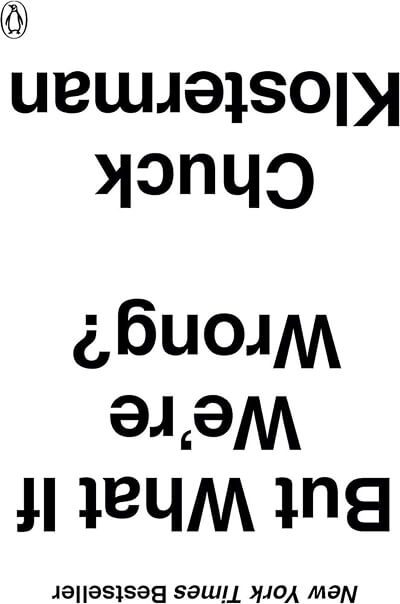
Also a very creative solution to use an upside-down cover. A subtle hint that with new discoveries, humanity’s outlook on the world gets turned upside down as well.
14. The Kamogawa Food Detectives, by Hisashi Kashiwai (2013)
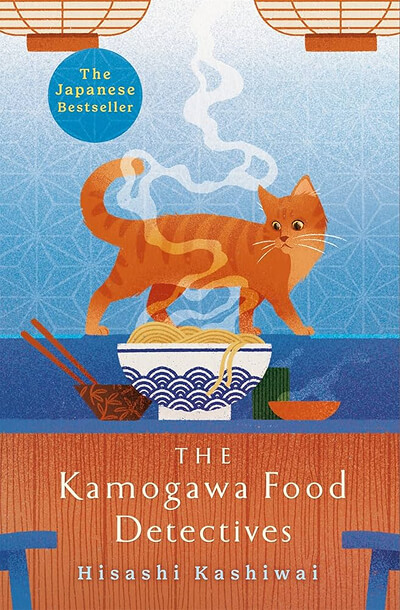
Topic of the book: This novel follows a father and daughter who run a hidden diner in Kyoto and act as “food detectives” to recreate forgotten dishes for their clients. The narrative explores the profound connection between taste and memory, using detailed culinary investigations to help people reconnect with their past and find emotional closure. Through a series of quiet, episodic mysteries, the book shows the power of food to preserve history and heal the soul in the face of loss and change.
My take: Wow, what a comforting book! Perfect to read during the cold season with a cup of tea or cocoa. The warm story of Nagare and Koishi drew me right in and had the same calming effect as a thick blanket. The last book I read that was supposed to be comforting, was The Comfort Book by Matt Haig, but Matt could definitely learn a thing or two from Hisashi on how to invoke this feeling through writing.
This novel also gave huge waves of nostalgia for Japan. It has been only a year since I’ve been there on a two-week solo trip, but the atmosphere described in “The Kamogawa Food Detectives” sometimes took me back more strongly than viewing my own travel photos.
I have one piece of critique for this work though. The book is a series of six chapters, each dedicated to a different dish and detective story, but they all are too similar to each other. Once you read the first one, you essentially know the blueprint of the rest of the book. It gets repetitive after a while. But that did not stop me from enjoying the stories.
15. Shikake: The Japanese Art of Shaping Behavior Through Design, by Naohiro Matsumura (2020)
Topic of the book: This book introduces the concept of “shikakeology,” the study of using physical and psychological triggers to nudge people toward positive behaviors through playful and intuitive design. The text details how simple, non-coercive “devices” — such as painting a staircase to look like piano keys or placing a basketball hoop over a trash can — can solve social and personal problems without the need for direct commands or high-tech solutions. By analyzing dozens of real-world examples, the author demonstrates how to identify and create subtle environmental cues that spark curiosity and voluntary action for the betterment of society.
My take: After reading loads of books on design (it’s my occupation after all), I can say that this one is definitely the most accessible, and dare I say, even childlike — in a good sense. There is a brief, more technical explanation on what constitutes a “shikake” design, but the vast majority of the book is dedicated to showing real-world examples of such designs. My favorite example was using a colored tape, attached diagonally to a series of folders, to naturally hint at the correct order they should be shelved in.
For a long time my favorite designs were the ones that follow a “very little effort, but cause a profound impact” rule. Many of the examples in this book are exactly that, you can nudge people and encourage a positive behavior without some fancy, overcomplicated, or expensive designs. As above, sometimes all it takes is a bit of colored tape.
16. Ką veikia Japonija? (What does Japan do?, Lithuanian), by Andrius Kleiva (2023)
Topic of the book: This non-fiction book offers an authentic, non-touristic exploration of contemporary Japanese life through the eyes of a Lithuanian author living in Japan. The text goes beyond common cultural stereotypes to examine the intimate details of Japanese daily existence, including neighborhood social dynamics, medical system, and funeral traditions. By blending personal essays with interviews and onsite observations from various regions, Andrius shares a nuanced look at how people in Japan work, practice religion, and navigate their own society from the inside out.
My take: Another book about Japan I picked up driven by my severe nostalgia of experiencing this country. The book starts with a few rather lengthy interviews, and at first I thought that the rest of the book is also going to be the same — just interviews and even more interviews. I was starting to get worried, as I did not find the structure of author’s interviews to be easy to follow. The questions seem to be stripped of their wider context and there are many random jumps in topics. Although it was interesting to read about the Japanese people Andrius was interviewing.
After a while, the interview format stops and the book goes on in a bunch of essays about personal experiences of Andrius, from finding an apartment to rent to visiting a hospital. And these essays are where the book really shines. I absolutely love his writing style, it’s so quirky, unique and engaging, that I could not shake the thought, that if I ever start writing more actively, I want to do it in a similar style. I hope Andrius never stops showing this quirky side of his, I believe this alone did the heavy lifting on this book and made it very memorable.
Thank you for reading my impressions of these books! My previous bibliography was originally posted on Medium.